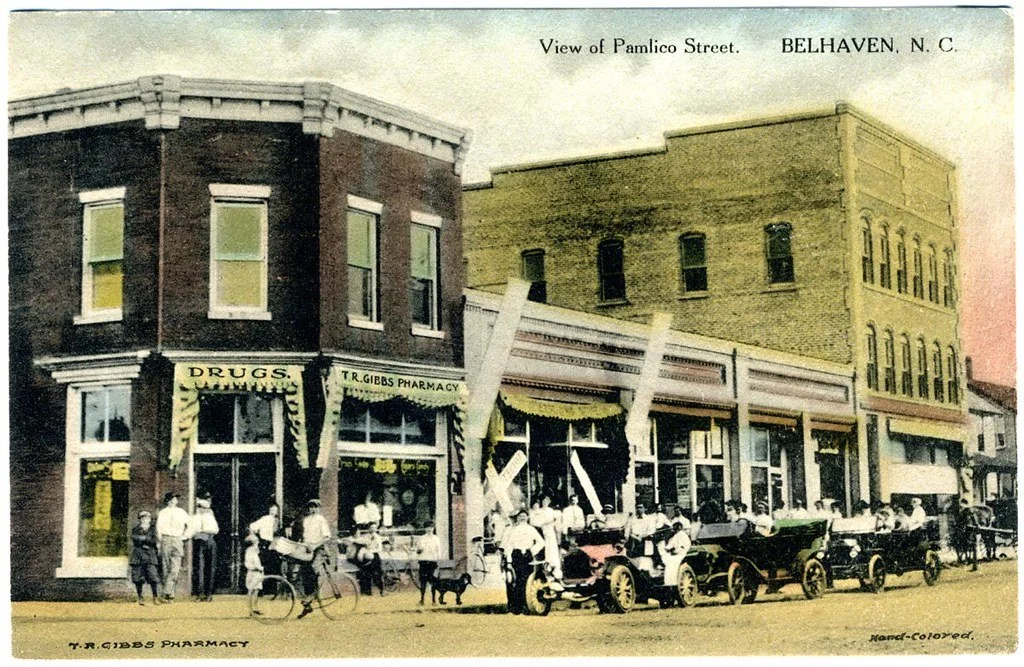
Belhaven was first settled in the 1880s as Jack's Neck before the name was changed to Belle Port in 1891 and again in 1893 to Belhaven, although not officially being incorporated until 1899. During the 1890’s, 1900’s, and 1910’s, Belhaven developed into a thriving town with its economy based on the lumber industry. In 1891 the Norfolk and Southern Railway took over the Albemarle and Pantego and brought rail service to Belhaven. With its railroad and port facilities, Belhaven became the center of a large scale lumbering industry based on thousands of acres of woodland in Beaufort and Hyde counties. By 1910, half a dozen lumber companies, each employing several hundred workers, were located in Belhaven, resulting in the local government issuing a $10,000 Public Improvement Bond which led to the construction of the Belhaven City Hall.
Historic Belhaven
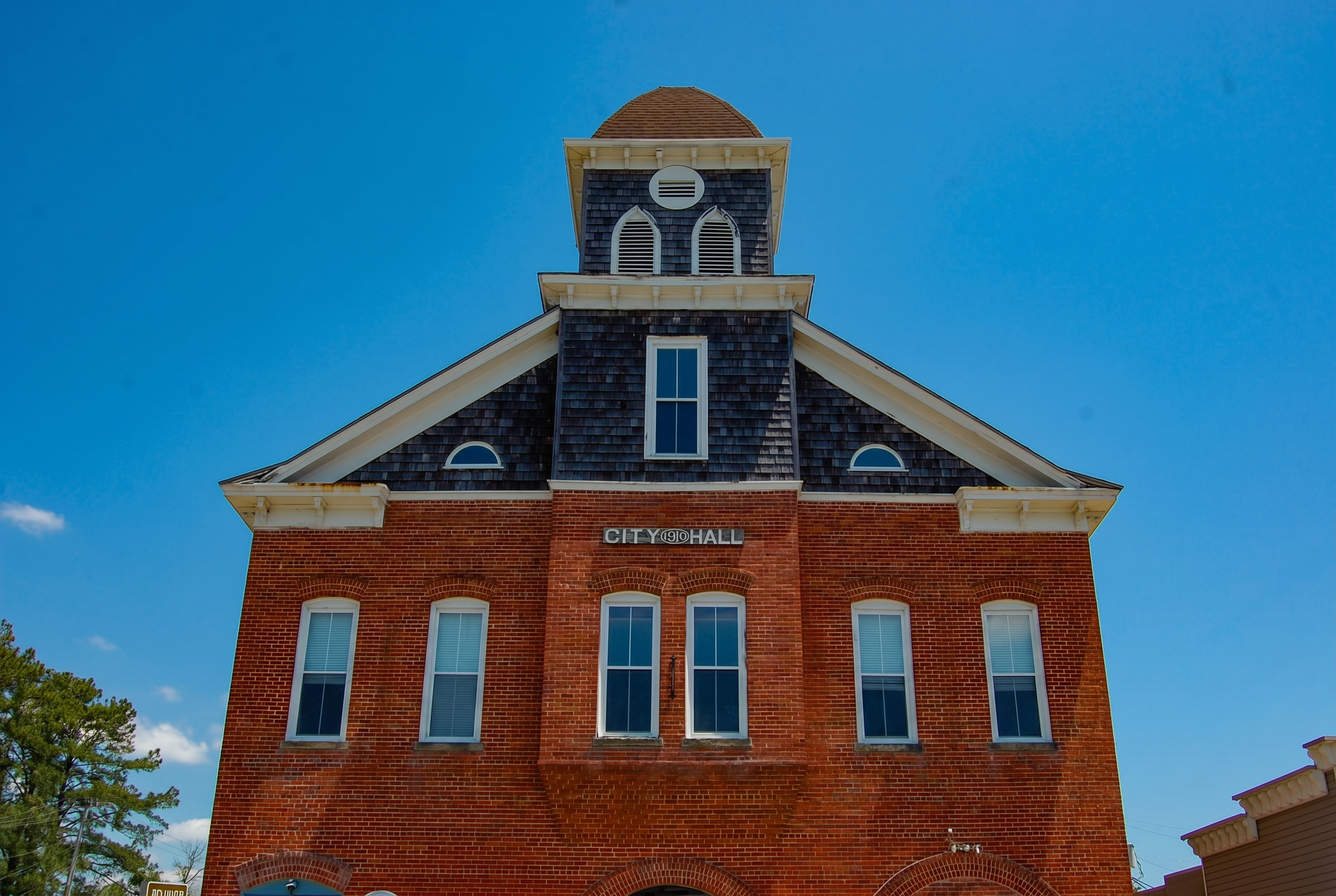
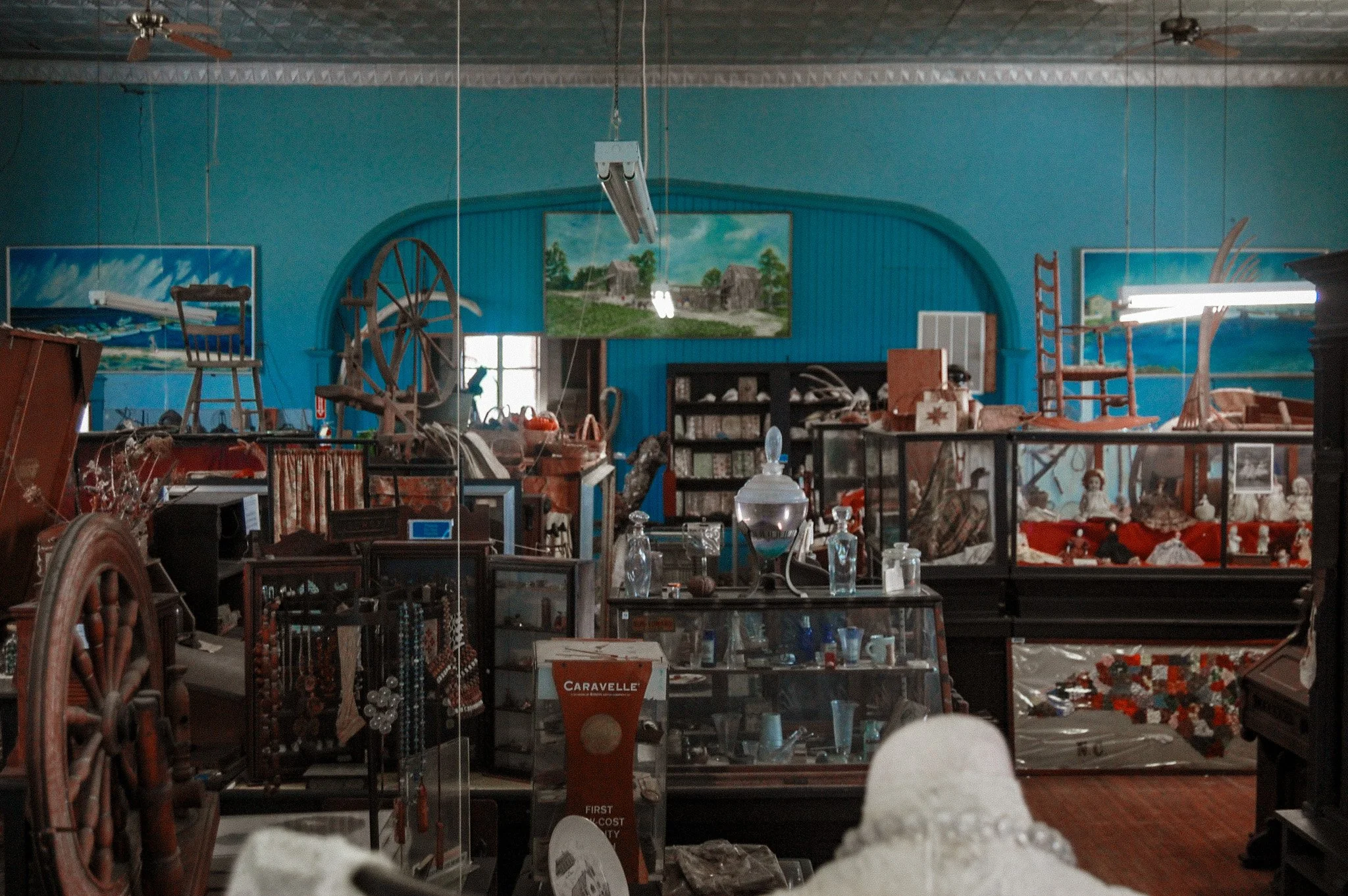
Designed by local carpenter W. T. Kirk, the building was constructed in 1910 of hand-laid brick with a wood-shingled pediment and belfry. The entrance to the Belhaven City Hall is through a central arched opening which leads you to a hallway where market stalls once lined the first floor, now home to the Belhaven Senior Club. To the right of the central entrance is an identical opening which was the entrance to the fire department, now serving as the headquarters for Toy Trains of Belhaven. To the left of the main entrance is a short flight of brick steps to the doorway leading to the second floor of the City Hall. The second floor was once home to a large auditorium, but now is home to the Belhaven Memorial Museum, featuring a unique collection of local artifacts. For more information about the Belhaven Memorial Museum, visit their website below!
The Belhaven City Hall
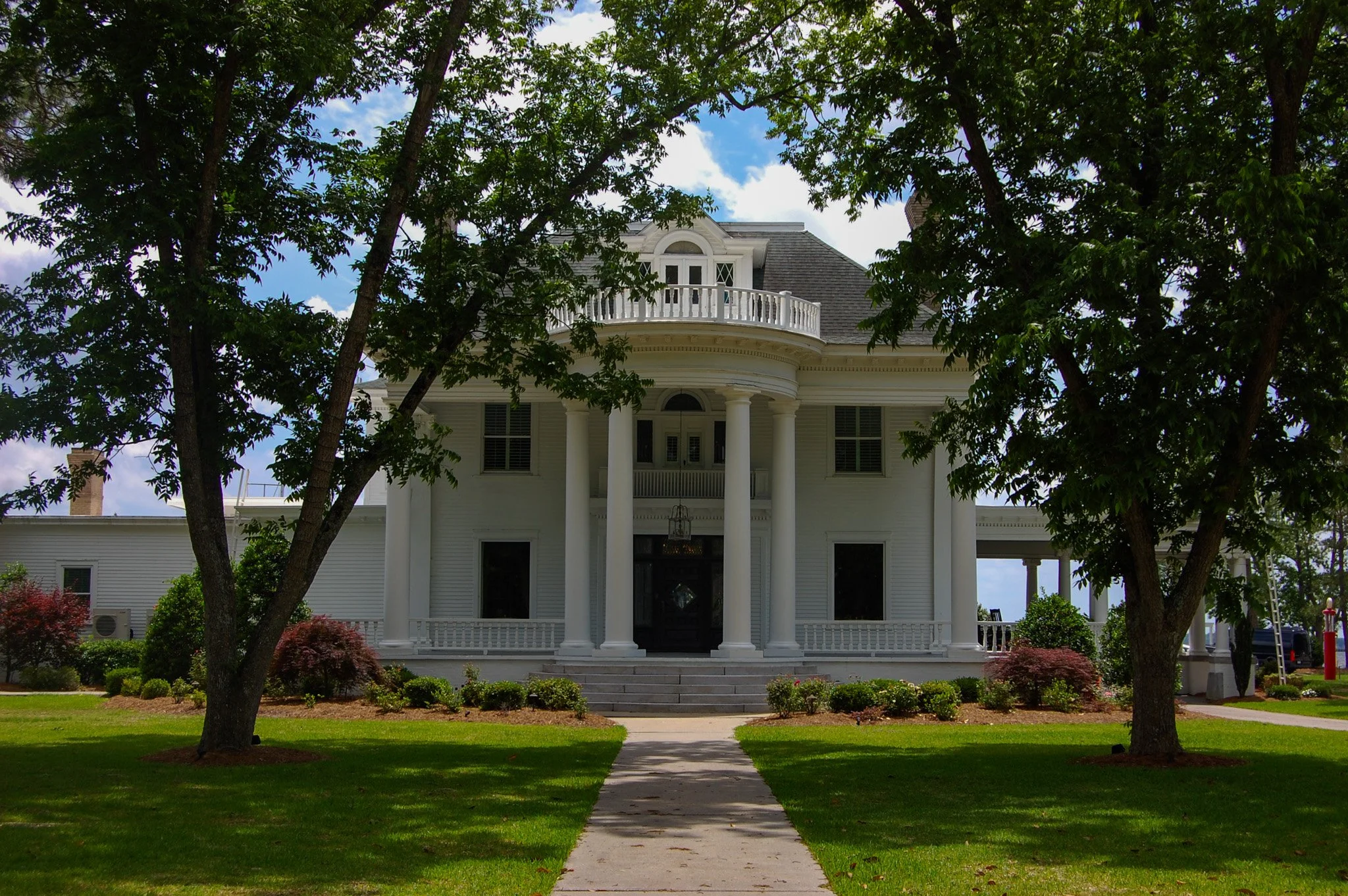
In 1899, John Aaron Wilkinson, President of J.L. Roper Lumber Co. and Vice President of Norfolk & Southern Railroad, began construction on the grand Victorian mansion now known as River Forest Manor. The mansion was completed in 1904, showcasing some of the most exquisite craftmanship of it’s time, with carved oak mantels, ornate ceilings, and large intricate columns all made by Italian artisans. Today the River Forest Manor remains one of Belhaven’s treasures, bringing in the likes of James Cagney, Burl Ives, Walter Cronkite, and Roy Clark, and acting as a restaurant, wedding venue, marina, hunting club, and so much more!
River Forest Manor
The Station at Wynne’s Gut
A project by Down East Preservation
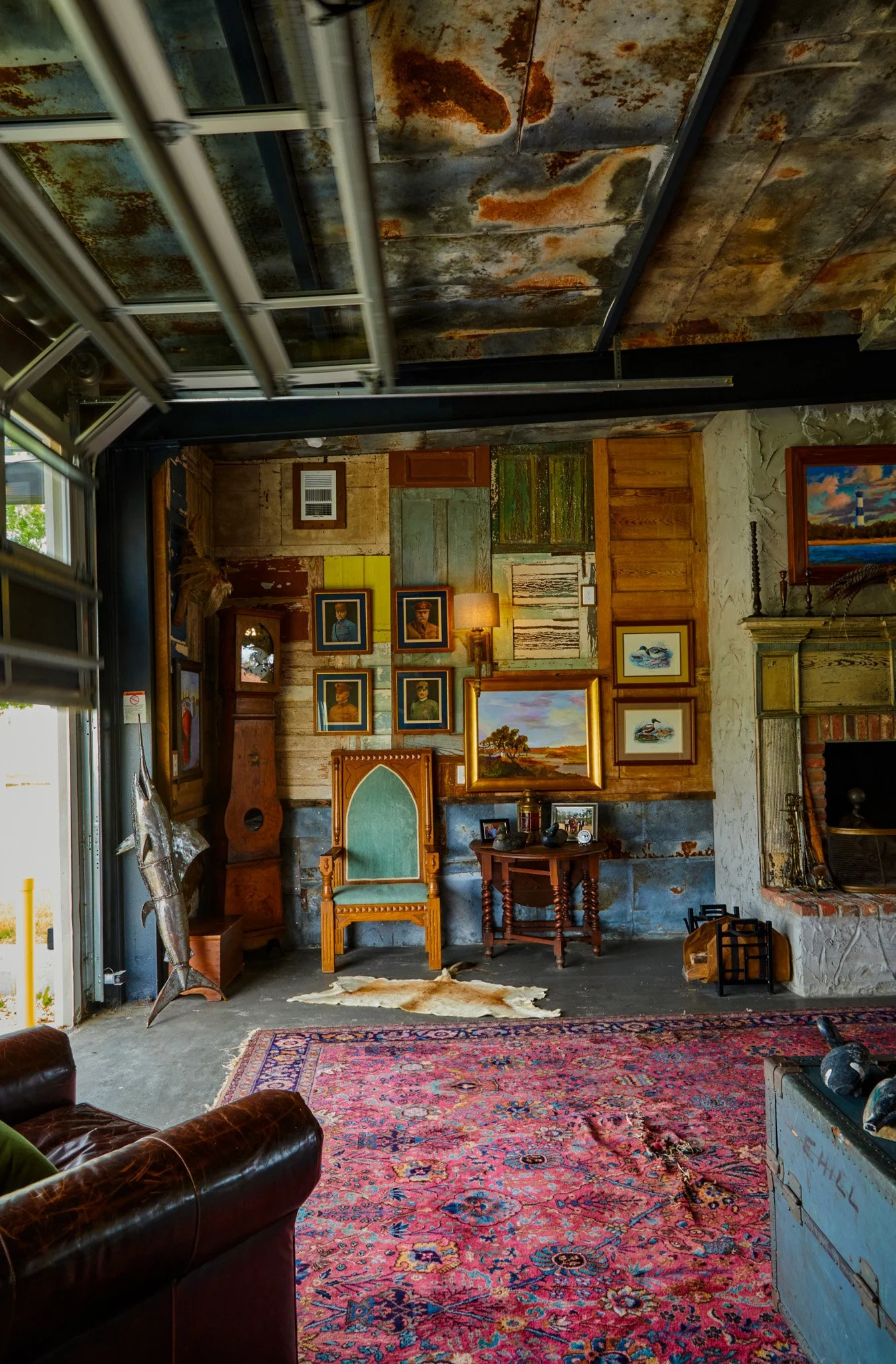
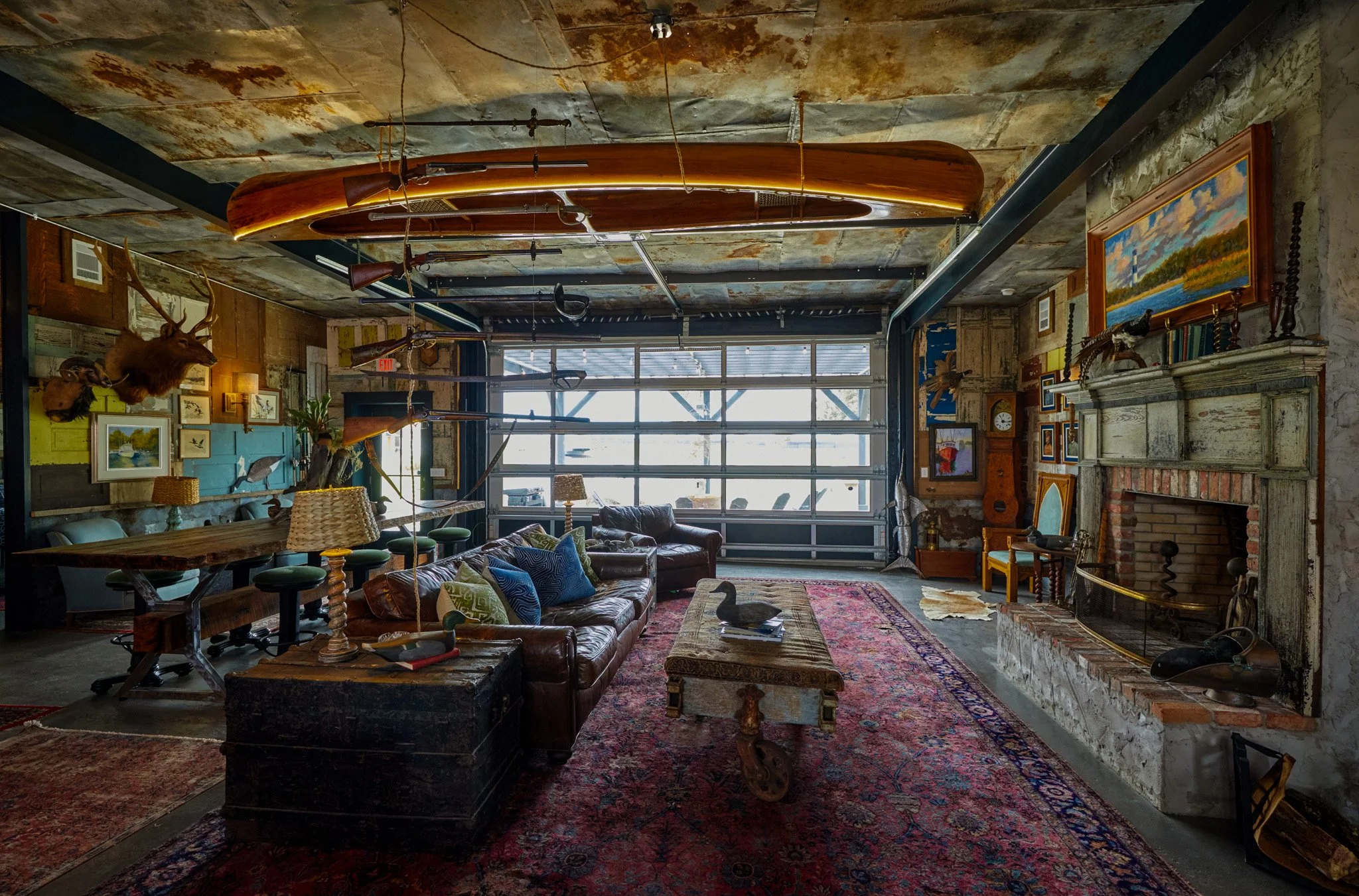
Built in 1963, The Station at Wynne’s Gut began its life as a Gulf gas station in the heart of downtown Belhaven, NC. Designed in a classic mid-century modern style, the building featured an office on the right-hand side and three bays with glass doors on the left, where mechanics serviced cars from across eastern North Carolina. Over the years, The Station housed a variety of businesses, from a hunting outfitter to, most recently, an ice cream shop. When Down East Preservation discovered the building, we knew it had the potential to become something truly unique. Today, The Station at Wynne’s Gut serves as both an innovative workspace and a testament to the power of adaptive reuse and is a true reflection of what makes Down East Preservation different.
Belhaven Commercial Historic District
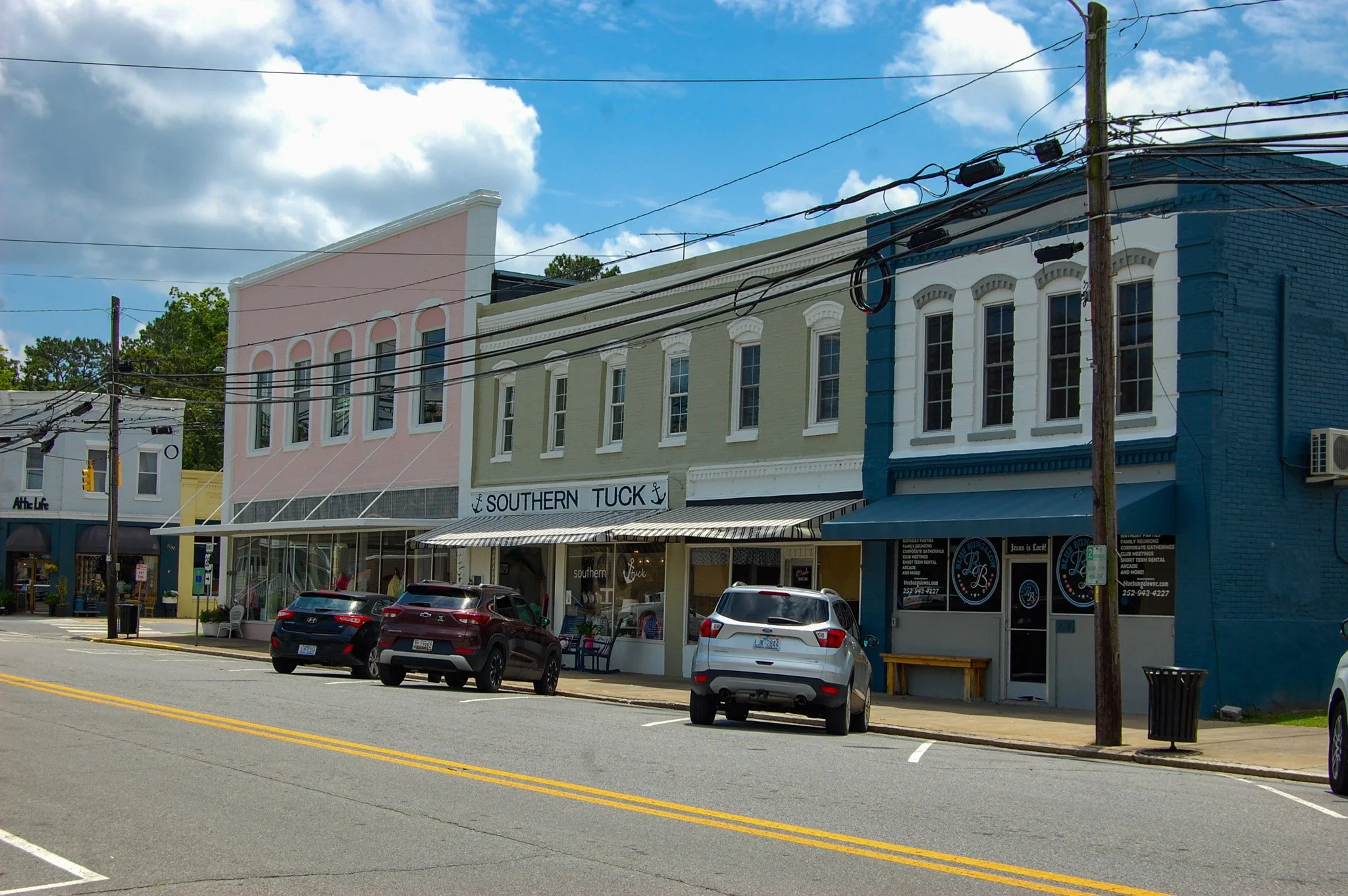
260 – 292 East Main Street | 246 – 288 Pamlico Street
Recognized by the National Register of Historic Places, the Belhaven Commercial District is made of 13 brick buildings built in the early to mid 1900’s. The downtown area is recognized for its important association with the commercial development of Belhaven during the first six and a half decades of the twentieth century. The district encompasses within its boundaries buildings that housed banks, drug stores, general stores, and movie theaters, all of which served the community as the primary commercial center during the towns early years.